
Lead-based paint remains one of the most serious hidden hazards in New York City buildings, especially in older residential and commercial properties. While many property owners assume lead is no longer an issue, the reality is that thousands of NYC buildings constructed before 1978 still contain lead-based paint beneath newer layers. This is why XRF lead testing NYC has become the gold standard for accurate, safe, and compliant lead detection.
In this comprehensive guide, we’ll explain how XRF lead testing works, why it’s considered the safest and most reliable option, and when NYC property owners, landlords, buyers, and contractors should schedule professional testing.
Understanding Lead Paint Risks in NYC Buildings
New York City has one of the oldest building stocks in the United States. Many homes, apartments, schools, and commercial spaces were built long before lead paint was banned. Even when paint appears intact, underlying layers may still contain hazardous lead.
Why Lead Paint Is Still a Problem
Lead paint becomes dangerous when it deteriorates, cracks, or is disturbed during renovations. When this happens, lead dust and chips can spread through indoor spaces, creating serious health risks—especially for children and pregnant individuals.
Common risk scenarios include:
Renovation or remodeling projects
Window and door friction
Aging paint surfaces
Water damage or humidity
Improper past paint removal
Because these risks are often invisible, professional testing is essential.
What Is XRF Lead Testing?
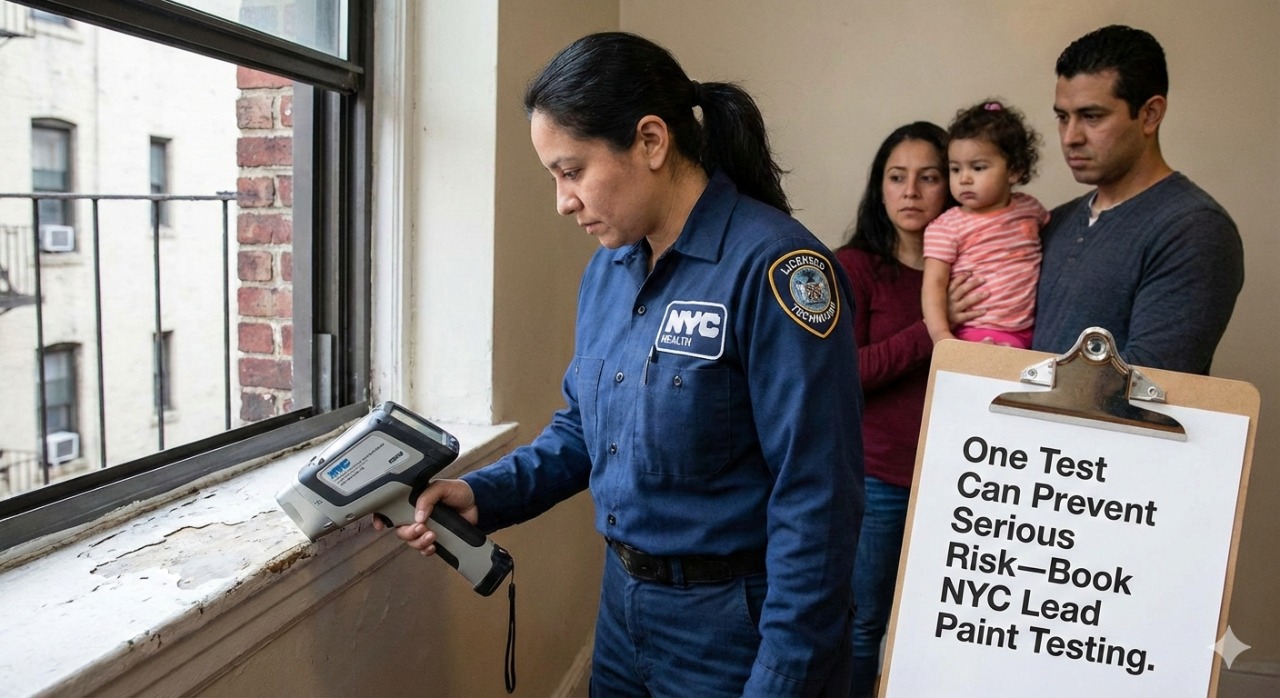 XRF (X-Ray Fluorescence) lead testing is a non-invasive method used to detect lead in painted surfaces without damaging walls, doors, trim, or other building materials. This advanced technology allows inspectors to analyze multiple layers of paint instantly.
How XRF Technology Works
XRF devices emit a low-level X-ray beam that interacts with the paint layers. If lead is present, the device measures its concentration and provides immediate readings. This makes XRF inspection NYC services far more efficient and accurate than traditional paint chip sampling.
Why XRF Lead Testing NYC Is the Safest Option
1. Non-Destructive Testing Method
One of the biggest advantages of non-destructive XRF testing NYC is that it does not damage surfaces. There is no drilling, scraping, or cutting required, which means:
No repair costs after testing
No release of lead dust
No disruption to occupants
This is especially important in occupied homes, rental units, schools, and childcare facilities.
2. Immediate and Accurate Results
Unlike lab-based paint chip testing, which can take days, XRF lead testing NYC provides instant results. This allows property owners and managers to make quick, informed decisions regarding compliance, renovation planning, or remediation.
3. Highly Reliable and EPA-Recognized
XRF testing is recognized by the EPA, HUD, and NYC regulatory agencies as a reliable method for lead detection. When performed by certified professionals, results are precise and legally defensible.
When Is XRF Lead Testing Required in NYC?
New York City has strict regulations regarding lead paint safety, especially in residential properties where children may reside.
Situations Where Testing Is Strongly Recommended
Buildings constructed before 1978
Rental properties with child occupants
Property sales and purchases
Pre-renovation assessments
Compliance inspections for landlords
Daycares, schools, and healthcare facilities
In many cases, certified XRF testing NYC helps property owners demonstrate due diligence and avoid violations or penalties.
XRF Lead Testing vs Traditional Paint Chip Testing
Understanding the difference between testing methods can help property owners choose the safest option.
XRF Testing Advantages
No surface damage
Faster results
Multiple surfaces tested in one visit
Lower long-term costs
Safer for occupants
Paint Chip Testing Limitations
Requires physical sampling
Can release lead dust
Slower turnaround times
Surface repairs needed
For most NYC properties, XRF is the preferred method.
Who Needs Certified XRF Testing NYC Services?
Landlords and Property Managers
NYC landlords are responsible for maintaining safe living environments. XRF testing helps identify lead hazards early and supports compliance with local housing regulations.
Homebuyers and Sellers
Before purchasing or selling a property, lead testing provides transparency and peace of mind. It can prevent costly surprises after closing.
Contractors and Renovators
Renovation activities can disturb lead-based paint. XRF testing before work begins ensures safety and compliance with federal and city regulations.
Schools and Childcare Centers
Facilities serving children are held to higher safety standards. XRF inspections help protect vulnerable populations and meet regulatory requirements.
The XRF Inspection Process Explained
When you schedule XRF lead testing NYC, here’s what you can expect:
Step 1: Property Assessment
A certified inspector reviews the building’s age, layout, and painted surfaces to determine testing locations.
Step 2: On-Site XRF Testing
Using specialized XRF equipment, the inspector scans walls, doors, windows, trim, and other painted components.
Step 3: Data Analysis
Lead concentrations are measured instantly and recorded accurately.
Step 4: Detailed Reporting
You receive a professional report outlining:
Areas with lead-based paint
Surface-specific readings
Compliance recommendations
Next steps, if needed
Health Benefits of Early Lead Detection
Lead exposure can cause long-term health issues, particularly in children. Early detection through XRF lead testing NYC helps prevent:
Developmental delays
Learning disabilities
Behavioral problems
Neurological damage
Pregnancy-related complications
Preventive testing protects both occupants and property owners from serious consequences.
Compliance and Legal Protection for NYC Property Owners
NYC enforces strict lead safety laws. Failure to identify or address lead hazards can result in:
Fines and violations
Legal liability
Delayed renovations
Tenant disputes
Professional XRF inspection NYC services provide documentation that demonstrates compliance and responsible property management.
Why Choose Professional XRF Lead Testing Services?
Not all testing services are equal. Choosing a trusted, certified provider ensures accuracy, safety, and compliance.
What to Look for in a Testing Company
Certified inspectors
EPA and HUD-compliant equipment
Experience with NYC regulations
Clear, detailed reporting
Non-destructive testing methods
About CleanNYC Lead and Mold Solutions
CleanNYC Lead and Mold Solutions provides reliable, professional XRF lead testing NYC services for residential and commercial properties.
Business Name: CleanNYC Lead and Mold Solutions Address: 841 Knickerbocker Ave, Brooklyn, NY 11207 Phone: 212-381-6001
Our certified inspectors use advanced XRF technology to deliver accurate, non-invasive lead testing that meets NYC compliance standards. We focus on safety, transparency, and clear guidance for property owners.
Frequently Asked Questions (FAQs)
What does XRF lead testing NYC detect?
XRF testing detects the presence and concentration of lead in painted surfaces, including walls, trim, doors, and windows.
Is XRF testing safe for occupied homes?
Yes. Non-destructive XRF testing NYC does not release lead dust and is safe for occupied spaces.
How long does an XRF inspection take?
Most inspections are completed within a few hours, depending on property size.
Do I need certified XRF testing NYC for renovations?
Yes. Pre-renovation testing helps ensure safety and compliance with lead regulations.
Is XRF testing accepted by NYC authorities?
Yes. XRF testing is widely accepted by NYC housing and health agencies when performed by certified professionals.
Final Thoughts: Why XRF Lead Testing NYC Is the Smart Choice
Lead paint remains a real risk in NYC properties, but modern testing methods make detection safer and easier than ever. XRF lead testing NYC offers a non-invasive, accurate, and compliant way to identify lead hazards before they become a serious problem.
Whether you’re a landlord, homeowner, buyer, or contractor, investing in professional XRF testing protects health, property value, and legal standing—making it the safest path forward in lead paint detection.