
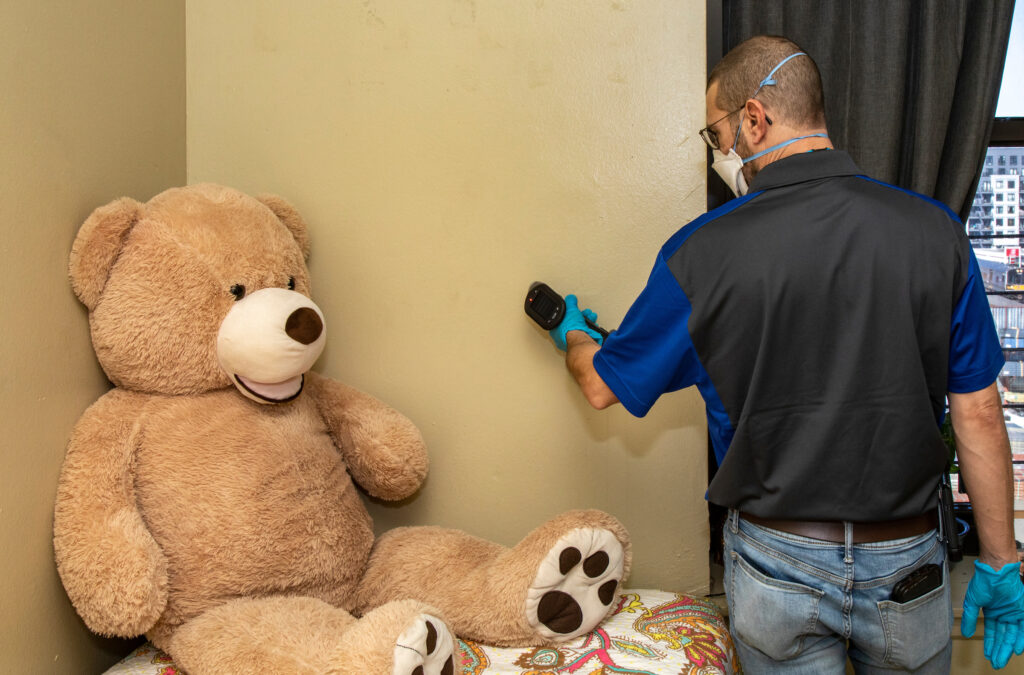
Older homes in New York City often contain hidden hazards, with lead-based paint being one of the most serious. Lead exposure poses significant health risks, especially to children and pregnant women. Identifying and addressing these risks before renovations or even routine maintenance is crucial. This is where Lead Testing XRF comes into play.
At CleanNYC Lead and Mold Solutions, we specialize in XRF lead testing and provide safe, reliable, and residential XRF lead test services for Brooklyn and NYC homes. Our inspections help homeowners, landlords, and tenants identify high-risk areas and ensure safe living conditions.
What Is Lead Testing XRF?
Lead Testing XRF uses X-ray fluorescence (XRF) technology to detect the presence of lead in paint, dust, and building materials. Unlike traditional testing methods, handheld XRF lead tester devices provide instant results without damaging walls or surfaces. This non-destructive approach makes it ideal for residential properties and pre-renovation inspections.
Why Lead Testing XRF Is Essential for NYC Homes
Homes built before 1978 are at high risk of containing lead-based paint. Lead dust can cause serious health problems, including:
Cognitive and developmental delays in children
Neurological issues and high blood pressure in adults
Long-term organ damage with prolonged exposure
Lead Testing XRF identifies contaminated areas before renovations or repairs, preventing dangerous exposure. It also helps property owners comply with NYC regulations, including Local Law 31 for older buildings.
The Lead Testing XRF Process
A professional inspection from CleanNYC Lead and Mold Solutions follows a structured approach:
1. Visual Assessment
Our certified inspectors perform a walkthrough to identify surfaces that are likely to contain lead, such as windowsills, door frames, stair railings, and trim.
2. Residential XRF Lead Test
Using a handheld XRF lead tester, we scan paint and surfaces for lead content. The device provides immediate readings, allowing inspectors to pinpoint high-risk areas without scraping or damaging walls.
3. Risk Evaluation
We assess the concentration of lead in various areas and identify high-risk zones, focusing on locations that are frequently touched or disturbed during renovations.
4. Detailed Reporting
Clients receive a comprehensive report detailing lead-positive areas and recommended actions. Recommendations may include lead-safe renovation practices, encapsulation, or full lead abatement if necessary.
Benefits of Lead Testing XRF
Non-Destructive Testing: No scraping, sanding, or damage to walls.
Fast Results: Handheld XRF lead tester provides immediate readings.
Accurate Detection: Finds lead in multiple layers of paint.
Regulatory Compliance: Ensures compliance with EPA and NYC regulations.
Peace of Mind: Confirms your home is safe before renovations or occupancy.
High-Risk Areas Identified During Lead Testing XRF
During inspections, certain parts of a home are more likely to contain lead:
Window frames and sills
Door frames and thresholds
Baseboards and moldings
Staircases and railings
Areas with peeling, chipped, or deteriorated paint
Identifying these areas before renovations prevents lead dust from spreading and keeps families safe.
Frequently Asked Questions (FAQ)
Q1: How long does a Lead Testing XRF inspection take?
Most residential inspections can be completed in 1–3 hours, depending on the size of the property.
Q2: Can I perform an XRF lead test myself?
While home kits exist, certified inspections with handheld XRF lead tester devices ensure accurate results and legal compliance.
Q3: What happens if high lead levels are detected?
Recommended actions may include encapsulation, professional removal, or lead-safe renovation practices to minimize exposure.
Q4: Is Lead Testing XRF required in NYC?
For homes built before 1978, especially rentals, inspections are recommended to comply with Local Law 31 and other safety regulations.
Q5: How often should residential XRF lead tests be conducted?
Before any renovation or periodically in older homes to ensure ongoing safety.
Why Choose CleanNYC Lead and Mold Solutions
Certified Inspectors: EPA-trained and licensed professionals
Advanced Handheld XRF Devices: Non-destructive, accurate testing
Comprehensive Reports: Easy-to-understand results with recommendations
Trusted in Brooklyn and NYC: Serving single-family homes, apartments, and multi-unit buildings
Full-Service Support: From inspection to remediation guidance and clearance testing
Address: 841 Knickerbocker Ave, Brooklyn, NY 11207 / Call: 212-381-6001
Conclusion
Lead Testing XRF is the safest and most efficient way to identify high-risk lead areas in NYC homes. By using XRF lead testing, handheld XRF lead tester devices, and residential XRF lead test methods, property owners can prevent hazardous exposure, ensure regulatory compliance, and protect the health of families and tenants.
Trust CleanNYC Lead and Mold Solutions for certified, accurate, and professional inspections that make your home safer before renovation or occupancy.